The organizer didn't have us on her calendar! She denied everything until Caitriona played back her month-old message saved on her voice mail. The organizer said, "That *is* my voice," and then postulated, "Maybe you didn't call to confirm."
We think she's under 30, and has Alzheimers.
So there was no Old Folks Home show, with the proudly published set-list!
However, I did get a bright orange straw hat, cowboy-style, for the occasion.
Thursday, June 30, 2005

2nd gig

I have a gig today with fiddler Caitriona at Sunnybrook, as part of their music therapy entertainment program, or something. It's outdoors, and an hour. The set list as follows (I'm self-consciously imitating music bloggers like my pal Zoilus here):
Merry Blacksmith/Banshee
Foolish You
Song Chris Coole taught me
Cindy
Mole in the Ground
(switch banjos)
You Are My Sunshine
Darlin Corey
(switch banjos, retune - fiddle solo)
Ship Inn Reel
Old Joe Clark
Wildwood Flower
Devil's Dream
Waterbound
And, if we have more time, perhaps there will be a little Lork Frankin and a little Peg of My Heart... Do you think that covers an hour?
Tuesday, June 28, 2005
I'm In the Movies

For months, Kat and I have had a cheap video of this song I do called WE'RE IN THE MOVIES. Locations include a dancing school, an elementary school gym and the former East Bloc. We're very proud of it. It features the long-neck banjo as well as James Thomson on stand-up bass. We've resolved to get it online sometime this summer, somehow, linked to the 'jar. Stay tuned.
Sunday, June 26, 2005
What

I guess history can be pretty boring sometimes. Esp when I just regurgitate without even putting it in my own words. Sorry. Sometimes I need to use the 'jar as just a jar. I'm wondering whether I should be trying out dialogue for scenes here, ot whether that would be a mistake. Hmm. Hmmmmmm. Hmmmmmm.
Friday, June 24, 2005
William H. Robinson

This guy was a banjo player in his youth, but later became a preacher and got to speak of 'higher things' with his fellow travellers rather than being called upon to sing and play. One wonders if a beautiful voice was a prerequisite for preaching. And so whether Nathaniel Paul began his travels as a singing banjo player too. Not likely, but since playwriting is all about conflation...
From Log Cabin to the Pulpit,
or, Fifteen Years in Slavery:
At another time I went to a dance in the woods; the music consisted of tambourine, banjo and bones, but before the dance began they tied grapevines across the road, just high enough to catch a man riding horse back across the face or neck. When they heard the patrollers coming they ran, and the patrollers right after them; many of them were crippled, but not a slave was hurt or caught, So you see, there were some negro as well as Yankee tricks.
"The South and Its People"

by Wm Wells Brown, 1815-1884
THROUGHOUT the Southern States, there are still to be found remnants of the old time Africans, who were stolen from their native land and sold in the Savannah, Mobile, and New Orleans markets, in defiance of all law. The last-named city, however, and its vicinity, had a larger portion of these people than any other section. New Orleans was their centre, and where their meetings were not uninteresting.
Congo Square takes its name, as is well known, from the Congo negroes who used to perform their dance on its sward every Sunday. They were a curious people, and brought over with them this remnant of their African jungles. In Louisiana there were six different tribes of negroes, named after the section of the country from which they came, and their representatives could be seen on the square, their teeth filed, and their cheeks still bearing tattoo marks. The majority of our city negroes came from the Kraels, a numerous tribe who dwell in stockades. We had here the Minahs, a proud, dignified, warlike race; the Congos, a treacherous, shrewd, relentless people; the Mandringas, a branch of the Congos; the Gangas, named after the river of that name, from which they had been taken; the Hiboas, called by the missionaries the "Owls," a sullen, intractable tribe, and the Foulas, the highest type of the African, with but few representatives here.
These were the people that one would meet on the square many years ago. It was a gala occasion, these Sundays in those years, and not less than two or three thousand people would congregate there to see the dusky dancers. A low fence enclosed the square, and on each street there was a little gate and turnstile. There were no trees then, and the ground was worn bare by the feet of the people. About three o'clock the negroes began to gather, each nation taking their places in different parts of the square. The Minahs would not dance near the Congos, nor the Mandringas near the Gangas. Presently the music would strike up, and the parties would prepare for the sport. Each set had its own orchestra. The instruments were a peculiar kind of banjo, made of a Louisiana gourd, several drums made of a gum stump dug out, with a sheepskin head, and beaten with the fingers, and two jaw-bones of a horse, which when shaken would rattle the loose teeth, keeping time with the drums. About eight negroes, four male and four female, would make a set, and generally they were but scantily clad.
It took some little time before the tapping of the drums would arouse the dull and sluggish dancers, but when the point of excitement came, nothing can faithfully portray the wild and frenzied motions they go through. Backward and forward, this way and that, now together and now apart every motion intended to convey the most sensual ideas. As the dance progressed, the drums were thrummed faster, the contortions became more grotesque, until sometimes, in frenzy, the women and men would fall fainting to the ground. All this was going on with a dense crowd looking on, and with a hot sun pouring its torrid rays on the infatuated actors of this curious ballet. After one set had become fatigued, they would drop out to be replaced by others, and then stroll off to the groups of some other tribe in a different portion of the square. Then it was that trouble would commence, and a regular set-to with short sticks followed, between the men, and broken heads ended the day's entertainment.
On the sidewalks, around the square, the old negresses, with their spruce-beer and peanuts, cocoa-nuts and pop-corn, did a thriving trade, and now and then, beneath petticoats, bottles of tafia, a kind of Louisiana rum, peeped out, of which the gendarmes were oblivious. When the sun went down, a stream of people poured out of the turn-stiles, and the gendarmes, walking through the square, would order the dispersion of the negroes, and by gun-fire, at nine o'clock, the place was well-nigh deserted. These dances were kept up until within the memory of men still living, and many who believe in them, and who would gladly revive them, may be found in every State in the Union.
I've never before read an account of the American South that differentiated between different African tribes. This guy also witnessed an event in a church at the moment of emancipation, when a gust of wind thrummed the strings of a banjo that was hanging on the wall, thrilling the congregation.
But I feel I'm veering somewhat away from my subject.
A Dance

From the Life of J.D. Green:
I then went into the dance, and told the fiddler to play me a jig. Che, che, che, went the fiddle, when the banjo responded with a thrum, thrum, thrum, with the loud cracking of the bone player. I seized a little Sambo gal, and round and round the room we went, my money and my buttons going jingle, jingle, jingle, seemed to take a lively part with the music, and to my great satisfaction every eye seemed to be upon me, and I could not help thinking about what an in impression I should leave behind upon those pretty yellow and Sambo gals, who were gazing at me, thinking I was the richest and handsomest nigger they had ever seen: but unfortunately the pins in my breeches gave way, and to my great confusion my shirt tail fed out; and what made my situation still more disgraceful was the mischievous conduct of my partner, the gal that I was dancing with, who instead of trying to conceal my shame caught my shirt tail behind and held it up. The roar of laughter that came from both men and gals almost deafened me, and I would at this moment have sunk through the floor, so I endeavoured to creep out as slyly as I could; but even this I was not permitted to do until I had undergone a hauling around the room by my unfortunate shirt tail: and this part of the programme was preformed by the gals, set on by the boys--every nigger who could not stand up and laugh, because laughing made them weak, fell down on the floor and rolled round and round. When the gals saw their own tm they let me go, and I hurried outside and stood behind the house, beneath a beautiful bright moon, which saw me that night the most wretched of all negroes in the land of Dixie: and what may me feel, in my own opinion, that my humiliation was just as complete as the triumph of the negroes inside was glorious, was that the gals had turned my pockets out, and found that the hundred of dollars they had thought my pockets contained, consisted of 24 cents or pennies; and 50 brass buttons. Everything was alive and happy inside the room, but no one knew or cared how miserable I was--the joy and life of the dance that night seemed entirely at my expense, all through my unfortunate shirt tail. The first thing I thought of now was revenge.
His revenge was to cut all their horses loose. Which was dire since it was a surreptitious dance. But then, when he got home, through a twist of fate, he lost his own horse. To cover his loss he let out all the horses in the homestead barn. Then the master came along in the morning and blamed everyone else, giving them all whippings until someone confessed. But no one did, so the man asked our storyteller who was to blame. Our storyteller fingered a man he didn't like, who then got whipped until he confessed.
Meanwhile the loss of all the horses at the party prompted several members to make a run for freedom rather than face the beating they were going to get at home. Only a few made it, the rest were shot.
Maybe this is the sort of behavior Austin Steward is thinking about when he frowns on the music of the banjo.
A Very Reverend Vision of the Ol' Banjo

From Pictures of Slavery in Church and State;
Including Personal Reminiscences, Biographical Sketches,
Anecdotes, etc. etc.
by Rev. John Dixon Long, 1817-1894:
The plantation slaves often suffer with hunger. Despite the common boasts of the slaveholder, the Allwise only knows how much penury and starvation wear out the lives of the slaves. Dancing is one of their favorite amusements. I have often looked at their dances during their different holidays. The banjo is of all instruments the best adapted to the lowest class of slaves. It is the very symbol of their savage degradation. They talk to it, and a skillful performer can excite the most diverse passions among the dancers. Generally, however, they have no instruments, but dance to the tunes and words of a leader, keeping time by striking their hands against the thighs, and patting the right foot, to the words of
" 'Juber,' 'Cesar boy,'
Ash-cake in de fire,
'Possum up de gum tree,
Raccoon in de holler."
I have seen males and females dancing, rapidly whirling round, whooping and yelling with brutal delight, alike unmindful of the past and future. I have never known, in a single instance, of a colored man of any moral tone who was fond of the banjo or common dance.
I don't know what these people expect. They suffer from a failure of imagination. In one breath he's describing the anxiety of anticipating starvation, on the other he's questioning the desire to obliterate, for a moment, the past and the future, in a triumph of body and imagination. You might think these arguments have long been settled, but actually, he sounds like the new Pope
However, this seems to also be Austin Steward's view of such entertainments. He seems to have been a pretty temperate guy.
(btw, the work from which this quote is taken, along with the autobiography of Austin Steward, is the property of the University of North Carolina at Chapel Hill. It may be used freely by individuals for research, teaching and personal use as long as this statement of availability is included in the text.)
The Story Again

4 actors - two white, two black. The two white guys are a patter-and-bones style act who've come to the 1st London Ontario fair (which, really, took place in October 1836.) One of them is a hard-nosed feller. The other is more idealistic, learning how to play the banjo, and too young to be played by me.

The younger more idealistic one, who's acquired a banjo but doesn't know how to play it, one wants to go the extra 15 miles to Wilberforce to meet a true blue black man - Austin Steward, who runs the Wilberforce Hotel. He thinks, naively, that he can get some lessons from him.
Austin Steward is in the process of wrapping up his responsibilities and his business in order to return to his former home of Rochester NY. He's had it with Wilberforce (a town which was named, btw, by him.)

He's just sent his wife and 5 children ahead,though he's just received word that his eldest daughter caught a bad cold on the way. (from which, sadly, she won't recover.)
Austin is the farthest thing from a music instructor you could possibly imagine, and he quicky discovers the boys' cork cans (for blacking up.) He's offended, though perhaps a little intrigued by this introduction to big city folk, and asks them if they want to find out what it's like to step into a real black man's shoes.
The play unfolds primarily as the story being told by Austin to the younger, more idealistic type, with the other two playing various quakers, landowners, lt govners, Canada Company Reps, fellow ex-slaves, grifters, etc., who provide the spurs and hurdles of Austin's Wilberforce effort. His primary black nemesis is Israel Lewis, who is trying to enrich himself through colony-fundraising. His primary white nemesis is Thomas Mercer Jones, primary rep of the Canada Co., who is the Patrick Farrell of this story (but does not die.)
N.B. Patrick Farrell is the feller who claimed the land that James Donnelly had cleared. The latter killed the former during a fight at a work bee.
Thursday, June 23, 2005
Fateful Meeting

From Austin Steward's Memoir:
Mr. Israel Lewis made his way to Canada, and having obtained permission to establish a colony, he bargained with the Canada Company for one township of land, for which he agreed to pay the money demanded, in a few days, and then returned to Cincinnati, by way of Rochester. The poor, persecuted colored people, had in the mean time made ready for their flight from their homes, their native land, and from this boasted free Republic, to seek a residence in the cold and dreary wilds of Canada; to claim that protection from the English government which had been denied them in the land of their birth; and like the overtasked Israelites, "they went out with their wives and their little ones," but with smaller possessions.
During the stay of Mr. Lewis in Rochester, he reported there and elsewhere, that eleven hundred persons were then in the dense woods of Canada in a state of actual starvation, and called upon the humane everywhere, to assist them in such extreme suffering.
To me he also told the story of their destitution, which affected me deeply. I had at that time just made a public profession of my faith in the christian religion and my determination to be governed by its holy precepts. I felt for the distressed and suffering everywhere; but particularly for those who had fled, poor and destitute, from cruel task-masters, choosing rather the sufferings of cold and hunger, with liberty, than the meager necessities of life and Slavery. I concluded to go to Canada and try to do some good; to be of some little service in the great cause of humanity.

N.B. there were actually somewhere between 150 and 200 residents - nowhere near the 1100 Lewis claimed. Lewis wasn't after new colonists. Only funds. He got a new colonist though. And a nemesis.
Wednesday, June 22, 2005
Plenty Room on That Porch

The Toronto villa of Thomas Mercer Jones (at the corner of York and Front, you'll have to plug in the streets yourself on the map), the Canada Company Director who refused to sell any land in Wilberforce to the colonists, despite all the gruelling work they did, over several years, to clear it and make it habitable. He didn't even sell to Austin Steward.
I find it interesting that, despite all the information online about Thomas Mercer Jones, there is not a single mention of the fact that he refused to sell land to Austin Steward, President of the Wilberforce Colony, because Austin Steward, President of the Wilberforce Colony, was black. He remained a tenant in his own colony. The two names are never mentioned together on any web page I can find.
"Mister Jones," as Austin Steward refers to him, had been ripped off by Israel Lewis, and despite the fact the Lt. Gov. John Colborne had informed the Wilberforce settlers that in Canada, "so long as they remain true and loyal subjects they would have every privilege extended to them that was enjoyed by any of her Majesty's subjects, no distinction being made on account of colour," the same sentiment would not be expressed, or certainly not felt, by the Shakespeare-loving director of the Canada Company.
Plunk & Stars

Classic hyperlink style entry: Nice piece in Plunkthumping this morning about inexpensive banjos. Reminds me of something Pete Seeger once said. The banjo has no Stradivarius, despite what the Gibsons might say. There is no proper sound of banjo greatness. You mine (or pluck) each instrument for its own distinctive voice.
Also this morning, Celestial Monochord writes with the very good news that Pete's half-brother Mike Seeger has released some of his field recordings, rather than just spot-on imitations of them. And just below this essay is a piece on salt.
Tuesday, June 21, 2005
October 1836

...was London Ontario's first fall fair. Wilberforce was only 15 miles away. And elsewhere, in the States, P.T. Barnum was just getting started...

...with Joice Heth, a 161 year old woman who claimed to have been a nurse to little George Washington. Later, when she died, it was revealed that she was about half the age she claimed for herself. Which is, you know, still pretty old for those days. But the act fell apart anyway. For a bit.
But that was the Big Top. Or, the precurser to the Big Top. What did they have in fall fairs in those days? Besides horse-drawn merry-go-rounds? And was it possible to throw up a stage and create an act that hadn't been planned by the presenters? Like, say, a couple of intepid Ethiopian Delineators? Or did they have to get ready to run if they were caught? How well organized was a fall fair in 1830's London Ontario?
Monday, June 20, 2005

Help

Okay, so I'm teaching a little class in the fall on the uses of music in theatre. I've been thinking about the best classes I ever took, and most of them had a great deal to do with tools of inspiration and motivation. A character mask class springs to mind, as taught by Pierre Lefebvre at the National Theatre School of Canada. The key thing, aside from the teacher's patience and generosity (as well as a virtually embodied inspiration), was a plethora of brilliant masks and costume pieces, along with time to work with them to create a repertoire of small, repeatable pieces. The teacher himself took a back seat to his tools and his method.
If possible, I'd like to do the same thing with music. I'd like to have a cornucopia of instruments that could have come from the junkyard of some mythical musical deity - like Apollo or Fat Albert. I don't just want homemade instruments (though those are also welcome.) I also want a few complex instruments, like tubas and concertinas. I'll be bringing in my banjo and my banjola, and the department has offered to find me a few little things.
But I need more.

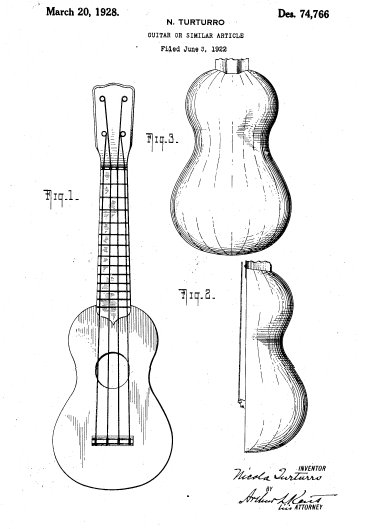
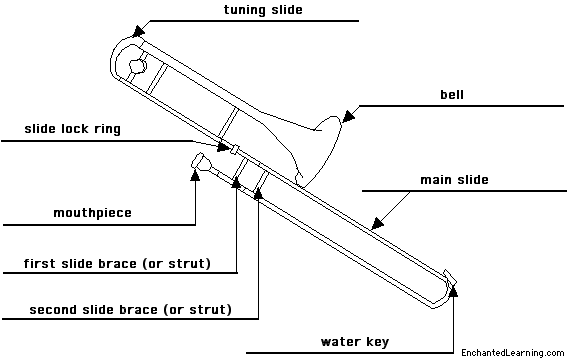
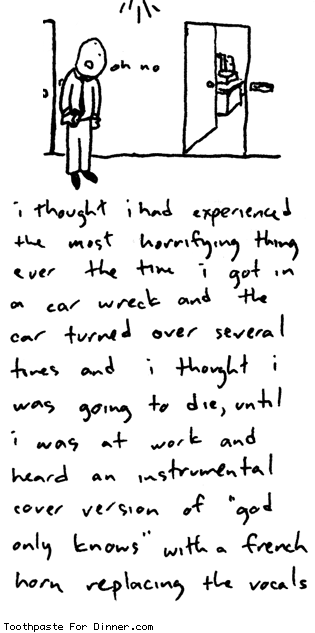
So, ahem, if any of you out there have an old uke or trombone or french horn that you don't want anymore and it's a waste of space and you figure you're never going to get around to selling it, well, perhaps I could impose on you to send it along to the following address:
Sean Dixon (AKA 'Banjo Banjar')
School of Creative and Performing Arts
Humber College Institute of Technology and Advanced Learning
3199 Lakeshore Boulevard West
Toronto ON M8V 1K8
I just thought it might be worth a try.

Thursday, June 16, 2005
Why Nobody Plays the Long Neck

Madonna of the Long Neck by PARMIGIANINO
I was talking to a guy in a shop on Queen Street who found out I had a long-neck and wanted to know if I wanted to buy another one. Turns out he had a 1960's Epiphone - same kind that got broken under my back by the shove of the bouncer. I told him that I hadn't liked mine very much either.
Later on I felt bad (I actually felt bad that I'd insulted that guy's banjo) and so I went back to the store and explained that I'd just begun to get some good sound out of my Epiphone when it got broken, and that I was sure I would have come to love it and that he should hold onto his.
Turns out he didn't want to sell it because of the way it sounded. He loved the way it sounded. He wanted to sell it because it was so cumbersome and heavy and difficult to play.
I have back-problems, which have gotten worse in recent years (although I'm told that men experience such problems between their 40's and their 60's and then they evaporate. Hmm. I wonder why.) I've often wondered whether the extra reach demanded by the long-neck has been one of the factors. There was awhile when I considered getting a snare-drum stand to hook it onto, so I could just stand behind it when I played in public. I may yet do that. It would look pretty cool, I think, just hanging there in space, ready to be played.
Still, I wonder if that's the reason why the long-neck is not so popular. Surely it's not Pete Seeger's fault, is it? Maybe people don't want to hear that deep rich sound. They'd rather a high twang then a low buzzing thrumb. The other thing I've noticed about it is, like many large things, the long-neck has to go at its own pace. It takes a real sense of precision to speed up and in some cases you just can't. It's a stately instrument, more like an elephant than a horse.
Now, there might be no point in playing a stately version of 'Devil's Dream', but there are many bluegrass and fiddle-tunes that were at one time delicate, pretty melodies. Wildwood Flower springs to mind. It's as haunting as they come and I'm convinced that it was first written to be played (and sung) at the pace of a love-song, which is what it is. But, generally-speaking, Wildwood Flower hasn't been played like that in about a hundred years, except by beginners. Same could be said for Groundhog, whose tune is as pretty as they come. Of course it seems absurd to sing
Here comes Sally with a snigger and grin
Here comes Sally with a snigger and a grin
Ground hog gravy all over her chin,
Oh Ground Hog!
any way but as fast as you can, but if you apply an old medieval lyric to the tune, such as
Western Wind, when will thou blow
The small rain down can rain
Christ if my love were in my arms,
And I in my bed again,
(which was reportedly found carved on the chest plate of a suit of armour) then the virtues of a slow rendition of the Groundhog tune become readily apparent.

In short, the long-neck demands a certain commitment to sostenuto. A certain stateliness. I started to play the banjo in 1992 to give me something useful to do when I got old, and as a preventative measure against illness, which was a subject heavy on my mind at the time. It wasn't until I acquired the long-neck that I found the instrument to match the notion that there's really no point in rushing.
Now if only I could do something about the back problems.
Wednesday, June 15, 2005
And

I thought I made up that word. Ten years ago.
Haven't seen it before or since, and ever time I've tried to use it since, it gets corrected to Jamboree.
As in

Takes another langauge I guess...
Oh...
So that's why I tend to misspell 'guage'.
Now I know...
'Banjoree' got coined for the 1st annual (and only) DISTRICT CAMPFIRE BANJOREE, no matter what these Germans might tell you. (It sounds like they had a good time.)
Maybe it's time to have a second. Perhaps a tie-in? Multi-continental?
ps. Mirek's addendum, from the Comments section:

Long-Neck Strings

Last summer I went to get my banjo fixed by a guy in Wingham named Ernie King. Not Ernie King the store, in downtown Wingham, but Ernie King the guy. He's retired but he does some fixing for friends of the Blyth Festival and friends of folk musicians like Anne Lederman, and I'm both. I can't remember what the problem was. Oh yeah, I remember:
 There's a scene in The Outdoor Donnellys where I'm narrating while running in the dark on that vast outdoor stage. We're coming up on the climactic scene and I'm introducing the primary villain with requisite energy and gravitas: My job is to run across the stage, leap up onto a little bench and pretend to be a stagecoach driver (for the primary villain) all the while narrating and holding the banjo and preparing to come in on time for a music cue. So. Usually the thing I had to watch out for was not hitting the primary villain (played by Brendan Wall, holding a guitar - a primary villain holding a guitar! it's inspired) in the head with the peghead of my slightly unweildy Deering long-neck. But one night I missed the lip of the bench as I jumped and it tumbled over and I sort of crashed onto my knees. I was trying to hold the banjo aloft but, as it turns out, the tailpiece whanged into the upturned bench and got bent all out of shape. I could not play it when the music cue came.
 (And yes, I know that's no way to treat a banjo. I wish I was Uncle Dave Macon, what do you want? I wish I could toss it up in the air and twirl it, but the best I can do is 'running with banjo.' )
So I drove out to Ernie's the next day, and he bent my tailpiece back into shape, speculating all the while as to why Deering would put such a paltry tailpiece on one of their signature banjos. He recommended a Kershner, but that's not what I'm here to talk about. He said to me, "You know you've got the wrong strings on that banjo." I said, but they're D'Addario, Medium gauge. He said, "Well they're the wrong strings. You've got to get yourself a set of long-neck strings."
And then he showed me an item in an old catalogue for Vega long-neck strings. As far as I can tell, they don't make them anymore, and when I later asked about 'long-neck strings' at the 12th Fret, they told me there was no such thing and that the long-neck banjo took the same type of string as every other type of five-string banjo.

Well, today I cleaned and polished my banjo and finally, a year later, put on a set of long-neck strings, found individually at outlets all over this drizzly city. It sounded all jangly when I tried to play it after, and I felt some regret for wasting my time, but I think it was just adjusting to the new tension, esp since it had spent some time without any strings at all while I biked to that secret den of banjo-lovers, Heinl (to see if they had a Kershner tailpiece along with all these special strings, which alas they did not. They had the strings but not the tailpiece, but that's not what I'm here to talk about.)
Tonight I picked it up to play it again and it sounded like a concert grand, even with the shoddy tailpiece. But I'm not here to talk about the tailpiece.
The gauges are as follows: .010, .013, .018, .026, .010.
Thank you Ernie King.

PS yesterday you wouldn't have been imagining things if you saw a pic of the mouse hitting the cat with a banjo instead of a brick. It was removed from my site. I s'pose its maker felt I had no right to steal his image, though I do wonder how he himself managed to secure the rights to alter Herriman's. Of course maybe that's why he did it. Perhaps he didn't want his brilliant but illegal pastiche to get around.
Monday, June 13, 2005



Sunday, June 12, 2005
Tapestry

Who ever said the Internet didn't have texture? Funnily enough, this is the only picture I've ever seen of a cowboy playing a banjo. They seem to exclusively play guitar. Or, you know, jaw harp. And of course the horn section in the back and the occasional bugle.
(I used to play the bugle. Or rather try to play the bugle. Though I prefered to throw it up in the air and then try to catch it over actually playing it. I prefered the low notes to the high notes because they didn't sound so painful. I also twirled it and wielded it very much like a revolver. It was for a hilarious street-performance character that no one ever saw. Back in my acrobat days. Just before I quit the circus. My outfit, FYI, was red and white.)
p.s. where banjo/cowboys are concerned, this guy...

...doesn't count.
Thursday, June 09, 2005
Three Czech Innovators

photo by Martin Stehlik from Patek's Site
I'm thinking of all things Czech because my in-laws have headed back to beautiful Prague in the Czech Republic and my wife has headed off to be the keynote speaker at a conference in Italy, and I'm still here in muggy Toronto.
I've posted before about this guy, but not with a pic of the the inventor of Patek-style banjo standing with the inventor of bluegrass banjo. Ray Powell, from Arizona USA, writes (to Patek), "Hi! I just thought that you would like to know that your style of Banjo playing was represented by me in the 16th Annual Phoenix Folk Traditions Music Festival this past weekend... I was the only performer there who played a 4-string Tenor Banjo 3 finger picking style... " I removed the all caps and the exclamation marks. I think though that Mr. Powell was really happy to be the only fellow Patek-style banjoist in Phoenix.
And here's what bluegrass sounds like in Czech. Or what Czech sounds like in Bluegrass. I also keep tabs on Prague through three trusty Prague expat blogs that have nothing to do with the banjo. The first one allows me to check the weather on the Charles Bridge.

And, ahem, speaking of Czech innovators that have nothing to do with the banjo (well, ahem), my wife's film Seeing Is Believing, airs 4 times this month on the Sundance Channel: on the 12th at 7 p.m, on the 15th (for insomniacs) at 5 am, and on the 25th at 7 p.m.

My third Czech Innovator is Gaston, who doesn't play the banjo either. He was a beloved sea lion in the Prague Zoo who escaped and swam down the Vltava and the Elbe during the Prague flood of 2002. He was followed across the border into Germany, playing with his pursuers all the way, but then, when he was finally captured, he died of exhaustion on the way home. The entire country mourned his passing and then, several months later, rejoiced to find he'd left something behind with his mate in the Prague zoo - a daughter named - er - perhaps Lida can fill us in here. And then, last year, he was the subject of a German play called SWIM, GASTON, SWIM. They call it a children's play. But everyone knows, or at least suspects, that children's plays have the potential to be the very best kind of plays.

That's all for now, but if you're ever in Prague, give my regards to Lida and Jiri up in Troja, above the curve of the river, above Stromovka and the zoo from which Gaston swam. And of course to Dr. Patek, who lives in the opposite direction, apparently.
Wednesday, June 08, 2005
I'm Back On

The above is an image by photographer Tim Davis, to be put in the Banjo Banj

John Millard was asked once from the audience of a concert he was giving why he played banjo instead of guitar. One has to question the motive of a question like that, no?
He answered in his droll, understated way that he wished he had a guitar with him onstage. He felt that if he had a guitar with him onstage he'd be able to put it down right there in the centre and take a shit in it.
I think that's hilarious. My apologies though to Tim Davis for matching his ethereal image with such an earthy anecdote.
Sunday, June 05, 2005
Net Troubles

So the people write and tell me I don't post enough and now I'm signing on at a web cafe with the excuse that the phone-man came to our house the other day and as soon as he touches the phone the internet stops working, though of course we don't discover it till he's gone, and he can't come back for a week because they're sort of quietly on strike or something, so then you get them on the phone and yell at them and then they email you what they sincerely seem to believe are helpful lessons on the mysterious workings of the internet - yes ladies and gentlemen: Bell Sympatico does this, over and over again (if you complain to them about the email, they will respond, yes, by sending you the email again, this time signed by a different name while they investigate your claim that the last guy was harrassing you with his emails - oh the endless, endless stupidity!) And to cap it all, you're stuck reading all this junk while paying for your time in the web cafe b/c the bell technicians don't know their way around the wiring!
Phew! So that's my current excuse and my mea culpa. When I get back online I plan to write again about banjos and the Czech Republic, in honour of the fact that my in-laws have returned to the beautiful city of Prague for the summer. Good night.
Wednesday, June 01, 2005
Reid Manjo

Okay so I've got this weird little practising banjo made by Glen Reid, called a 'Manjo', which seems to be a bit of a bogus name, because although it may resemble a mandolin at first glance, it's actually more bodied like a tenor guitar with two bites taken out of the top (oh and mine doesn't have the hole in the side like the one in the photo, but it's otherwise exactly the same.)
You might be saying, "That's not any kind of banjo!" but it is, my friend, it is. Do you see the tell-tale 5th-string peg poking out to the right in the full-body rear view shot? That short string means it's a banjo. Nothing else. Not the drum, not the skin, but the 5th string, aka the "drone". That's what makes a banjo a banjo, I tell ya's. So now you may ask, what would a ringing skin-stretched banjar lover be doing with a little monster like this, and I'll tell you, I'm not too sure myself, nope I'm not too sure myself...
It's a bit of a flakey instrument, but I do find it easier to practise with than my Deering long neck which, compared to the Manjo is like a concert grand to a piccolo. Not that the piccolo doesn't have its pleasures, but the main pleasure I get from my manjo is I can play it while sitting in a chair and it doesn't knock me off my feet. These days I'm learning how to play Devil's Dream on it, note for note. Devil's Dream sounds weird on the tinkly woody thing, but when I'm ready to rehearse with fiddle player Caitriona Murphy, with whom I'm thinkin of starting a wee band-o, I'll switch to the long-neck. The tension's tougher on the manjo too, the strings are thicker and the fretboard not quite as smooth, so I highly recommend it as a practise instrument for those who have banjo-hating neighbours. I might figure out how to get a concert sound out of it one day too, and play it in public. Don't think that'll be too soon though.
(To be fair, I give it a bit of a hard time because I made the purchase on an impulse instead of waiting to find the fretless I really wanted. But that's not the manjo's fault now is it.)
Oh, and the concert last week went okay except nobody could hear us on that noisy corner. Thanks for asking. Learned a new song for it though, that sounds good with banjo, fiddle, accordian and guitar: Foolish You, by Wade Hemsworth.
Second breezy post in a row. The hard-nosed research end of Banjo Banjar will be coming back around eventually. Also, I realize I've yet to finish the story of my banjo sagas, lost and found. I dealt with the Neufeld and the Epiphone but have yet to get to the Deering. Promises promises.
Subscribe to:
Posts (Atom)